
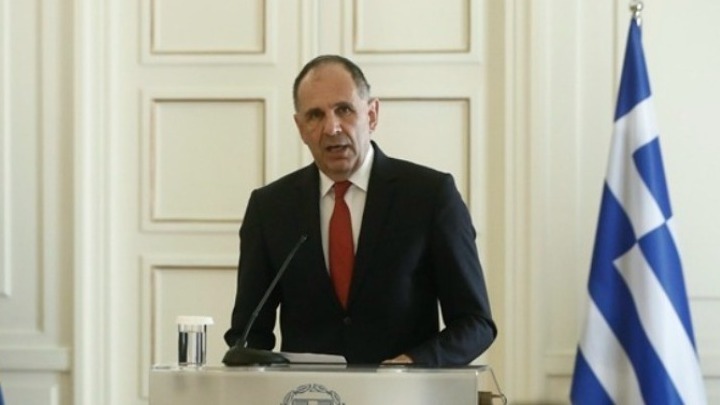
Foreign Minister George Gerapetritis sent a clear message to Ankara that Greece is determined to defend its sovereign rights and, if necessary, respond “on the ground”, speaking on Monday to OPEN. At the same time, he defended the policy of “calm waters” and maintaining open channels of communication with Turkiye, making clear that dialogue does not entail any retreat from Greece’s positions.
“We remain vigilant, but we are not concerned. And we are not concerned because we have the strength to safeguard our national interests in any field,” the Foreign Minister said, stressing that Greece is now in a much stronger diplomatic, economic and defence position.
Asked whether the latest Turkish moves signal the end of the “ calm waters” in the Aegean, Gerapetritis stressed that de-escalation in Greek-Turkish relations had never been an end in itself, but rather a means of establishing a functional relationship between the two countries.
As he said, Greece will continue to engage in dialogue with Turkiye, because “we must engage in dialogue with every neighbour”, while making clear that “calm waters in no way mean that we are retreating from any of our fundamental national positions”.
Asked how Athens would respond to Turkish provocations and whether high-level contacts would continue, George Gerapetritis said that Greece would take “all the necessary steps”.”We will respond to provocations and we will respond from a position of strength,” he stressed, adding that communication channels with Turkiye would remain open.
On the possibility of Turkiye attempting to obstruct surveys or the laying of the cable in the Kasos area, the Foreign Minister was unequivocal. “It goes without saying that Greece will fully exercise its sovereign rights. Today more than ever,” he said. Asked whether this could involve the deployment of Greek warships and aircraft, he replied that Greece had demonstrated that it could send “frigates and F-16s” wherever necessary. “Yes, if necessary, there will of course be a frigate, and there will also be the upgraded F-16s,” he said.
The Foreign Minister adopted particularly strong language in describing the strategy now being pursued by Athens. “Greece is no longer watching; Greece is acting,” he said, adding that “the era of inaction for Greece has definitively passed”.
Gerapetritis was also asked about the possibility of the Patriot battery currently stationed in Saudi Arabia being returned to Greece, and whether such a decision would be linked to the strengthening of Riyadh’s relations with Ankara and Islamabad. Gerapetritis stressed that the strategic relationship between Greece and Saudi Arabia had developed considerably in recent years and stood “above and beyond any temporary circumstances”.
He made clear, however, that the decision on whether the Patriot battery should remain in Saudi Arabia or return to Greece was an operational one. “If we determine that it is necessary for the battery to return to Greece, we will do so. If we determine that our needs require it to remain there – whether geopolitical, diplomatic or operational – it will remain there,” he said.
The Foreign Minister’s overall message to Ankara was that Athens is not abandoning dialogue, but at the same time will not leave any challenge to its sovereign rights unanswered: maintaining open channels of communication, continuing Greek initiatives and, if necessary, responding “ on the ground” from a position of strength.


