
Romania’s Embassy to Belgium organises 5th edition of the Symposium on Medical Diplomacy
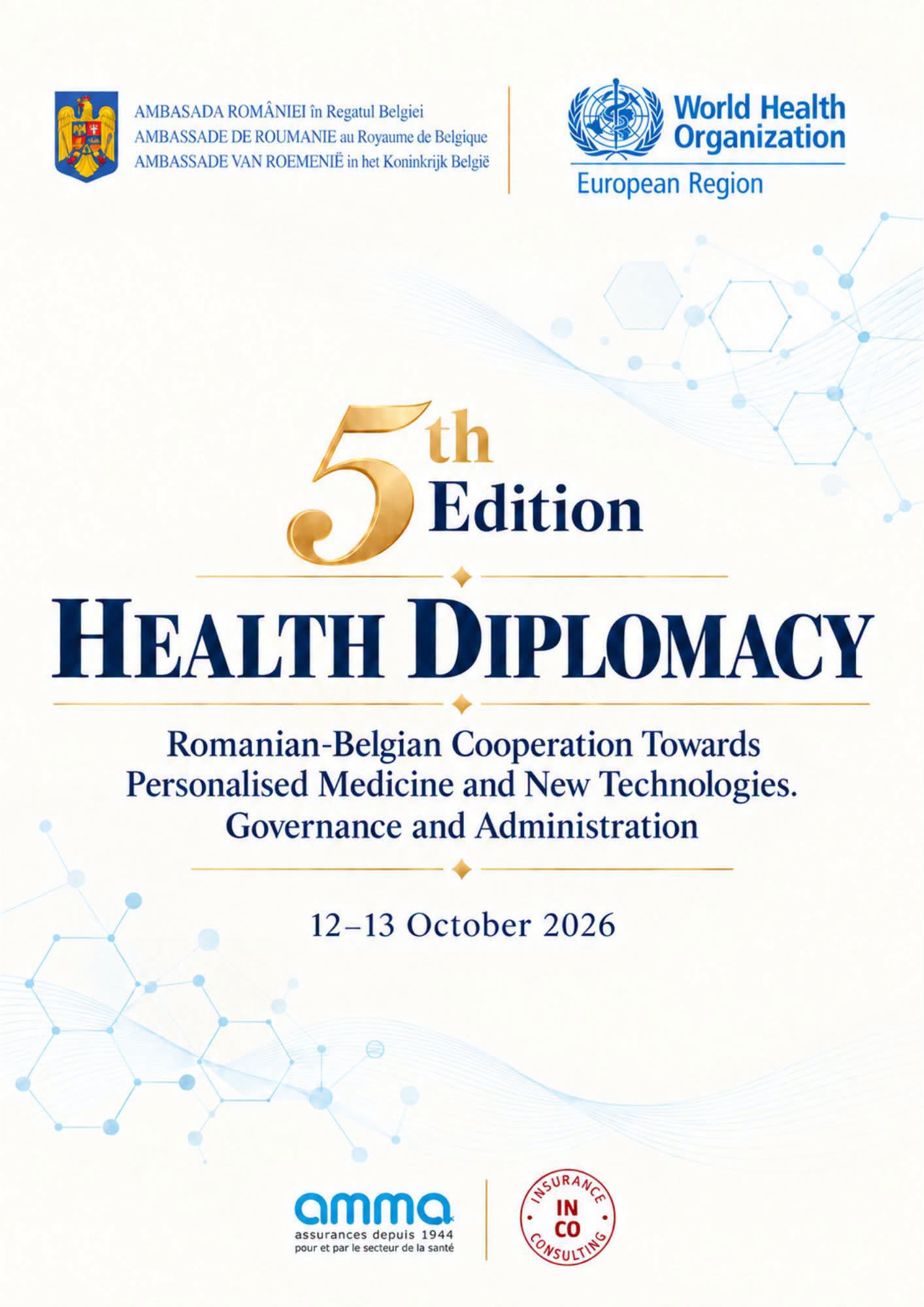
Romania’s Embassy to the Kingdom of Belgium, in partnership with the World Health Organisation (WHO) Regional Office for Europe, is organising the fifth edition of the Symposium on Medical Diplomacy in Brussels on October 12-13, according to a press release issued by the diplomatic institution.
This year’s edition focuses on cooperation to advance personalised medicine and new technologies, with an emphasis on governance and administration.
An important objective of the diplomatic initiative is to develop the Platform for Romanian Doctors in Belgium, designed to connect Romanian professionals working in the Belgian healthcare system with universities, hospitals and research institutions in Romania.
According to the press release, the platform aims to facilitate the exchange of experience and best practice, the development of joint research and professional training projects, and the use of the expertise acquired by Romanian doctors within the Belgian healthcare system. The initiative also seeks to strengthen the role of the Romanian medical community as a bridge between the two countries.
The symposium aims to identify new opportunities for cooperation between public institutions, universities, research centres and healthcare professionals in Romania and Belgium, in the context of advances in personalised medicine and the integration of new technologies into healthcare systems.
The programme for October 12, includes official working visits and technical consultations at Sciensano, the Belgian federal public health institute, and the Department of Human Genetics at KU Leuven University. The meetings aim to deepen institutional dialogue and identify concrete areas for cooperation in public health, research and personalised medicine.
On October 13, discussions will take place at The Hotel in Brussels, with officials and government representatives from Romania and Belgium, public health specialists, and members of the Romanian medical and pharmaceutical community in Belgium expected to attend.
The focus will be on two main themes: the role of personalised medicine in European science diplomacy, with an emphasis on regulatory convergence, medical education, applied genomics and integration into the European Health Data Space (EHDS); and the development of infrastructure and patient access to innovation.
The second panel will address the use of artificial intelligence in clinical practice, the role of health data agencies, advanced screening programmes, longevity and new perspectives in oncology.


