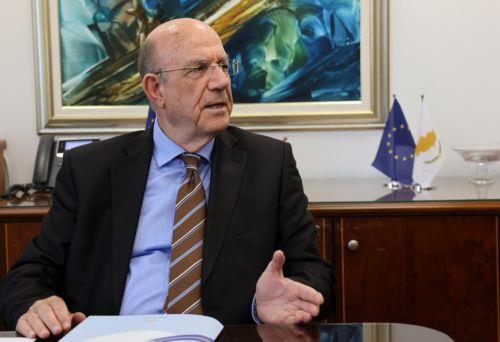
The Cypriot economy is expected to grow by 3.1% in 2026, despite significant challenges facing the global economy due to the ongoing Russia-Ukraine war and the conflict in the Middle East, Finance Minister Makis Keravnos said on Monday. Presenting the 2027 state budget before the House Finance Committee, Keravnos said economic growth was expected to remain at relatively high levels, at around 3%, during the 2027-2029 period.
The Minister said inflation was projected at 4% in 2026, before declining to 2.5% in 2027 and 2% in both 2028 and 2029, while unemployment was forecast at 3.8%.
Regarding public finances, he said the general government fiscal balance was expected to remain in surplus, reaching 2.7% of GDP in 2026 and improving further to 3.9% of GDP in 2027.
Public debt as a percentage of GDP is expected to decline significantly, by 6.1 percentage points in 2026, while it is projected to fall to 46.6% of GDP in 2027, compared with the current level of 48.9%. Keravnos said the projections confirmed a steady downward trend in public debt over the medium term.
Turning to the banking sector, the Minister said deposits were on an upward trend, driven by inflows from both households and businesses. Deposits by domestic non-financial corporations also recorded a slight increase.
He noted that total loans extended by Cypriot banks had been increasing since 2023, alongside an increase in new lending.
Keravnos added that the banking sector maintained a strong capital base and continued to strengthen its resilience, while credit institutions held high levels of liquidity.
The Finance Minister said the 2027 state budget had been prepared with the aim of maintaining a fiscal surplus, continuing to reduce public debt, promoting the green transition, restraining public sector employment and maintaining a robust financial system, so that potential risks would not pose a threat to public finances.