
Gonxhja: Spolia found within Apollonia points to a construction phase earlier than 4th century BC
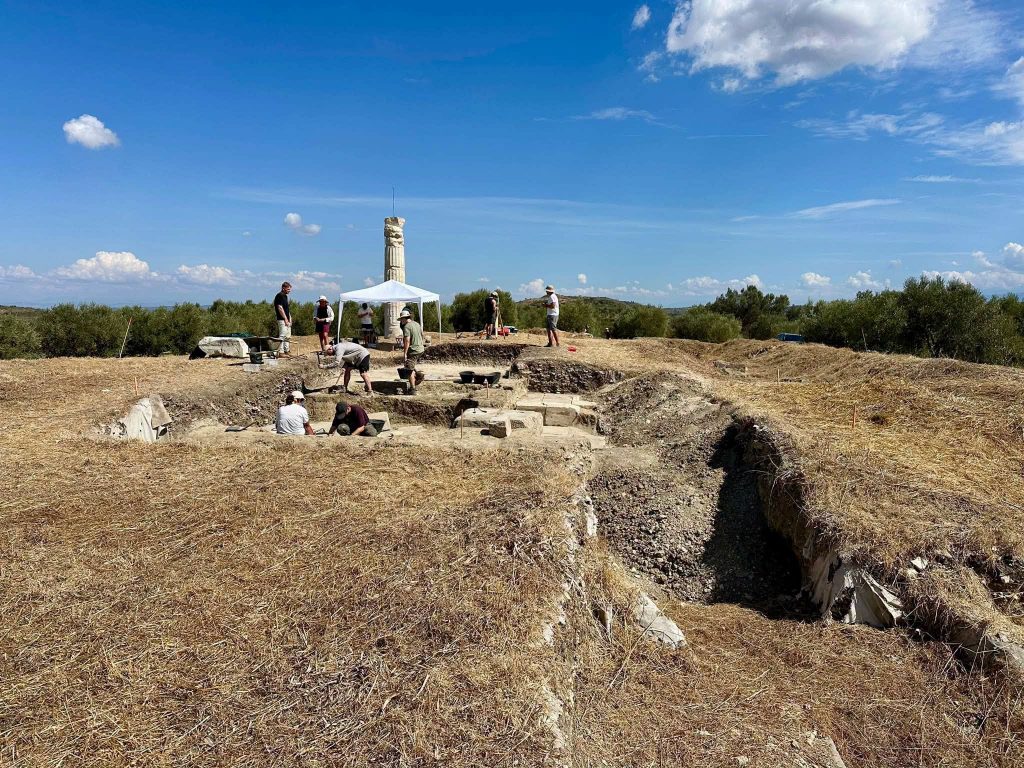
Minister of Tourism, Culture, and Sports Blendi Gonxhja announced that an Albanian-German-Romanian archaeological mission—in collaboration with the Institute of Archaeology in Tirana and the Winckelmann Institute at Humboldt University of Berlin—is continuing its investigations in this archaeological site.
According to Gonxhja, the excavations have made it possible to determine the complete ground plan of the temple, while the discovery of spolia in the foundation provides evidence of a structure dating back to before the 4th century BC.
Furthermore, architectural fragments and marble roof tiles uncovered during the research attest to the significance and unique character of this Doric-style monument, which once stood above the river port of the ancient city of Apollonia. These findings represent a significant contribution to expanding knowledge regarding the urban development, architecture and history of Apollonia—one of the most important centers of ancient civilization within Albanian territory.
Gonxhja stated that the research results facilitate a more comprehensive understanding and documentation of this archaeological heritage, while also helping to convey its history to both domestic and international visitors.
Archaeological excavations and discoveries made a few years ago provide authentic evidence of an ancient temple—dating back approximately 2,500 years—whose foundation remains entirely intact; initial estimates suggest it covers an area of about 1,000 square meters. It served as a site for religious observances, ranking among the most significant temples in the region.


