
Kosovo urges ambassadors to highlight new evidence of Serbian war crimes to international partners
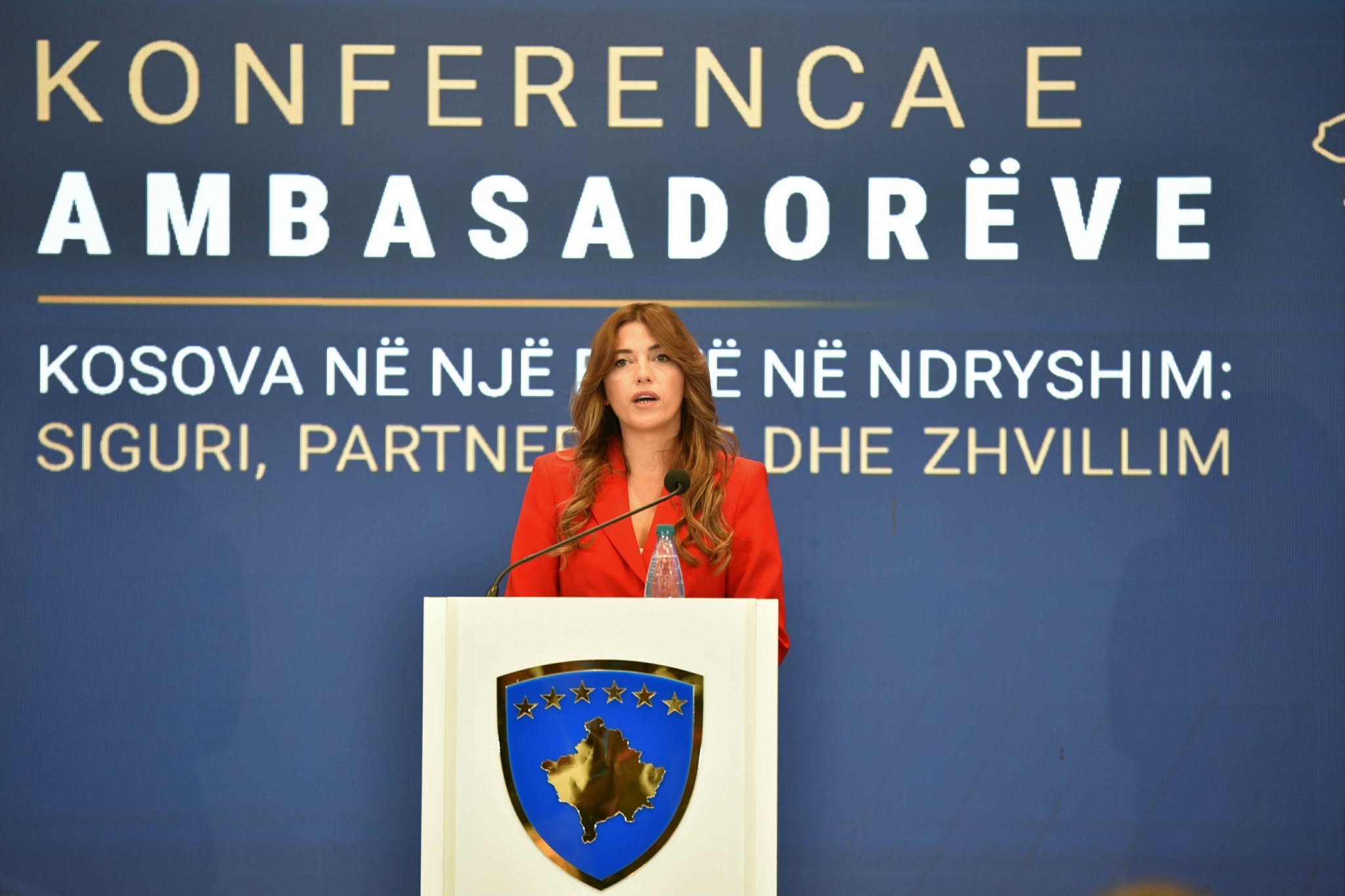
Acting President Albulena Haxhiu has called on Kosovo’s ambassadors to raise issues related to Serbia, war crimes, and developments that, according to her, pose a threat to Kosovo’s security in the countries where they serve.
At the ninth Conference of Kosovo Ambassadors, Haxhiu said that relations with Serbia remain one of the main challenges of Kosovo’s foreign policy.
She called for Serbia’s responsibility for the terrorist attack in Banjska, attacks against KFOR members, journalists and citizens, as well as the issue of those who went missing during the war, to continue to be raised in communications with international partners.
“Relations with Serbia remain one of the main challenges of Kosovo’s foreign policy. Serbia must be held accountable for the terrorist attack in Banjska, attacks against KFOR members, journalists, other citizens, and for handing over terrorist mastermind Milan Radoicic and others. We must also clarify the fate of more than 1,500 people who were forcibly disappeared during the war in Kosovo. Addressing these issues is an essential part of any process aimed at achieving genuine and sustainable normalization between Kosovo and Serbia. This responsibility becomes even more sensitive in light of recent developments, where mortal remains believed to belong to war victims have been found in Zubin Potok, while our institutions are also working on a third suspected mass grave site. For our diplomats, this must remain an ongoing issue in their communication with the governments and institutions of the countries where they serve. Our partners must know that new evidence of war crimes is still being found today. Therefore, pressure must be placed on Serbia to open its archives,” she said
Haxhiu also described as concerning a statement by Serbian President Aleksandar Vucic regarding the possibility of changing the course of the Ibar River.
She said Kosovo’s diplomats should make these statements known to international partners, stressing the importance of the Ibar-Lepenc canal and Lake Ujman for water supply, energy and agriculture.
In her address, Haxhiu also spoke about Kosovo’s relations with the United States.
She described relations with the US as crucial for Kosovo, but said that generational change in American politics creates a need for continued engagement to preserve support for and ties with Kosovo.
According to Haxhiu, the Albanian diaspora in the United States and Europe can also play an important role in this regard.


