
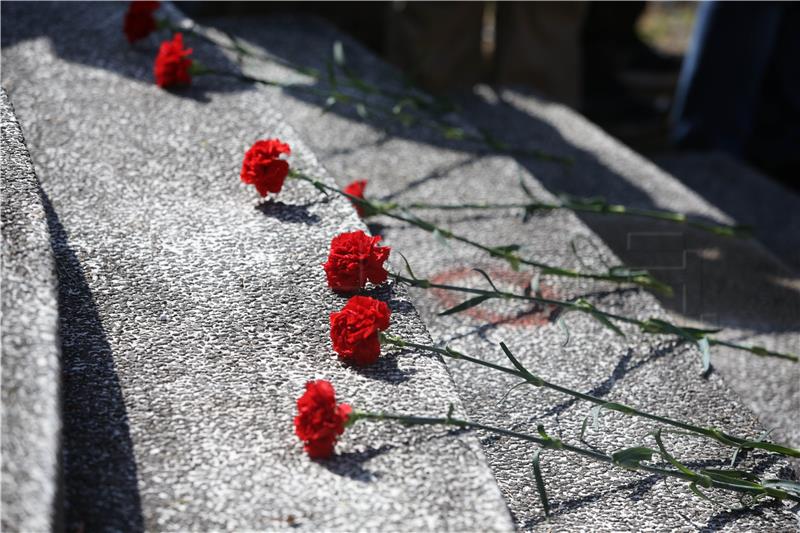
Croatia on Monday marks Anti-Fascist Struggle Day, commemorating 22 June 1941, when the First Sisak Partisan Detachment was established in the Brezovica forest near the central town of Sisak, regarded as the first anti-fascist military unit in this part of Europe.
The national holiday is marked with ceremonies in Split, Rijeka and the Brezovica Memorial Park, where the central commemoration will be held.
The First Sisak Partisan Detachment was formed after Nazi Germany’s invasion of the Soviet Union by members of the Communist Party. From its earliest days, the unit carried out sabotage operations, particularly targeting railway infrastructure.
It was led by commander Vlado Janić – Capo and political commissar Marijan Cvetković. Its members included the late Croatian Army general Janko Bobetko.
Its establishment marked the beginning of an organised armed resistance against fascism and Nazism that later spread across Croatia. More than 500,000 Croatian citizens took part in the broader anti-fascist liberation movement.
Around 230,000 fighters from Croatia served in the People’s Liberation Army, and 52 brigades, 17 divisions and five of its 11 corps were formed on Croatian territory.
During the Second World War, the State Anti-Fascist Council for the People’s Liberation of Croatia (ZAVNOH) exercised the highest legislative and executive authority in territories controlled by the anti-fascist movement. In 1945, it became the People’s Parliament of Croatia, preserving the historical continuity of Croatian statehood during the wartime liberation struggle.
After the end of the Second World War in 1945, the People’s Republic of Croatia was established as a federal unit within the Federal People’s Republic of Yugoslavia, which emerged from the war as part of the victorious Allied powers.


