
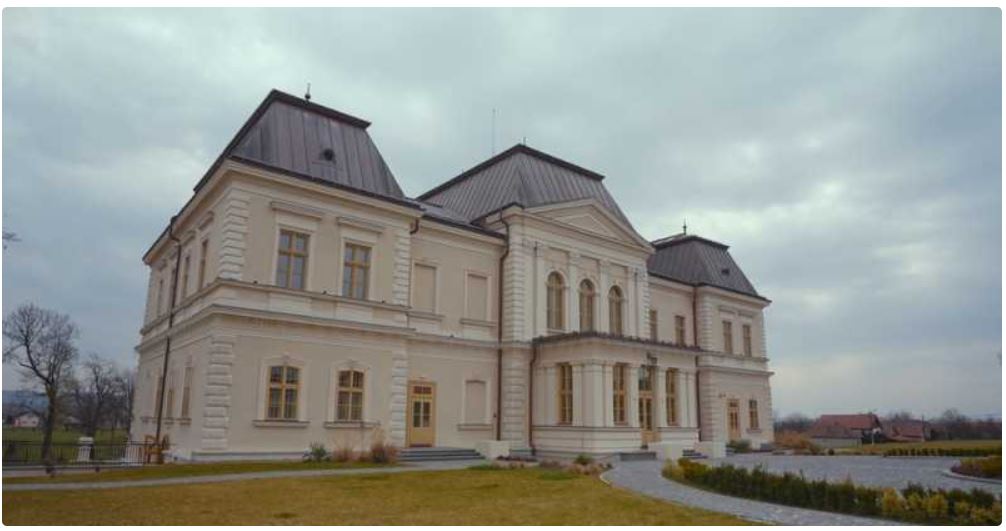
The Bánffy Castle in Rascruci, Cluj County, is among the winners of the European Heritage Awards – Europa Nostra 2026, the Cluj County Council (CJ) announced.
The county authority is also encouraging supporters and heritage enthusiasts to vote for the Rascruci site in order to secure the Public Choice Award granted by the European Commission.
“Bánffy Castle in Rascruci is the only project in Romania to receive the European Heritage Award – Europa Nostra 2026. All those who appreciate this architectural jewel, restored by the Cluj County Council, are invited to vote for the Public Choice Award. The Cluj County Council has been informed by the European Commission and Europa Nostra that the restoration project of Bánffy Castle in Rascruci has been selected as a laureate of the 2026 European Heritage Awards,” the institution said in a statement.
According to the same source, the Rascruci castle was chosen from among 261 eligible applications submitted by 40 European countries.
“I encourage all citizens, art and heritage lovers, and all those who have visited this architectural pearl – or who have not yet had the chance – to vote for this project. Cluj and Romania deserve international recognition for the effort invested in restoring a unique heritage site of inestimable historical value. I am confident that this castle, whose former glory we restored through an €11.5 million project, can win both awards granted by the European Commission. Let us continue this success story and show Europe what our commitment means by voting for the Public Choice Award as well,” said Cluj County Council president Alin Tise, as quoted in the press release.
Built in the 18th – 19th centuries, the castle is owned by the Cluj County Council, which completed its rehabilitation in 2023. The site is listed as a historical monument.


