Perperikon, Southern Bulgaria, (BTA)
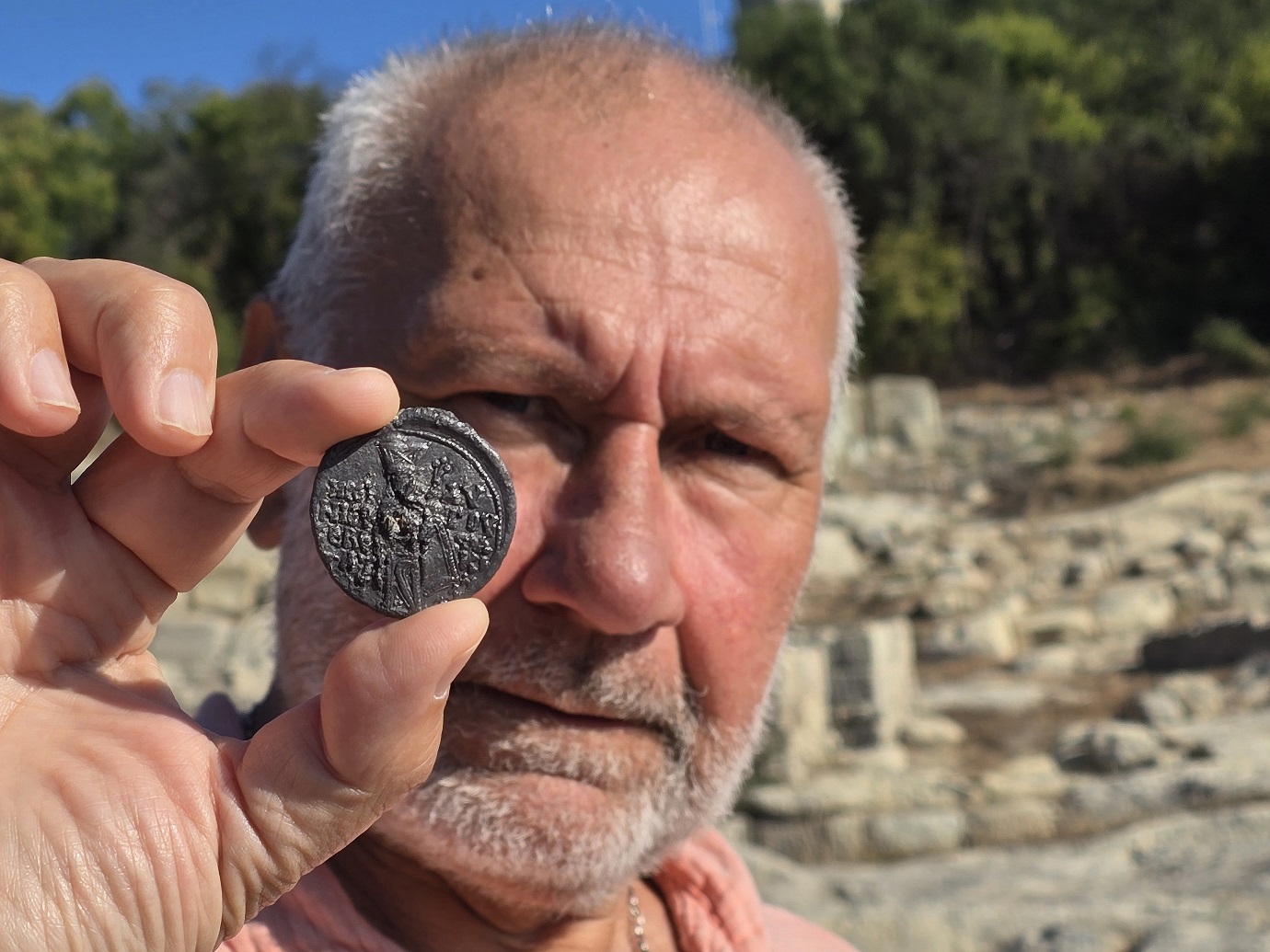
A personal seal of Empress Irene Komnene, providing evidence of correspondence between Bulgaria and Byzantium, is the latest discovery at Perperikon, excavation leader Prof. Nikolay Ovcharov told reporters on Tuesday.
According to him, it is only the fifth known seal worldwide belonging to perhaps the most influential woman in Byzantine history, who was also the mother-in-law of King Ivan Asen II. Other such seals are held in collections around the world, including at the Dumbarton Oaks museum in Washington, the Hermitage Museum in St Petersburg and private collections.
“She was the wife of John III Doukas Vatatzes, a great Byzantine emperor. This lady was the daughter of an emperor, granddaughter of an emperor, wife of an emperor and mother of an emperor. In other words, from every angle, it is hard to think of anyone more prominent in Byzantine history. At least, I cannot think of anyone off the top of my head,” Prof. Ovcharov said.
He recalled that the seal dates from the 13th century. At the time, Ivan Asen II had just emerged victorious from the Battle of Klokotnitsa, located only 29 km from Perperikon, while John III Doukas Vatatzes and his wife Irene ruled in Byzantium.
“Clearly, there must have been some very extensive correspondence, because these seals were used to seal letters,” the archaeologist said. He added that many interesting and important events took place between Bulgaria and Byzantium during those years. This was the period when Constantinople was conquered by the Latins. However, using his victory at Klokotnitsa on the one hand and the vast empire he had created on the other, Ivan Asen II decided to restore the Bulgarian Patriarchate dating back to the time of Tsar Simeon, Prof. Nikolay Ovcharov recalled.
He specified that the particularly intensive correspondence took place in 1233-1235, with 1235 culminating in the recognition of the Bulgarian Patriarchate at Lampsacus, on the coast of Asia Minor, as one of the Orthodox patriarchates.
“At the same time, however, the treaty also included another clause, namely the marriage of Ivan Asen II’s daughter Elena to Theodore I Laskaris, heir to the throne of the Empire of Nicaea – the Byzantine Empire – and son of Irene, whose seal I am showing. These are the two events that may have prompted a letter and the seal of this high-ranking Byzantine lady to appear here,” Prof. Ovcharov explained.
The seal of Empress Irene Komnene bears her image wearing a crown and imperial robes on one side, and Christ, the Redeemer of human sins, on the other – an “exceptionally rare iconography”, the archaeologist stressed.
He added that this is the fourth seal discovered at Perperikon belonging to a major ruler. The others are a seal of Emperor Anastasius I Dicorus from the 5th century, a seal of Constantine IX Monomachos from the 11th century, a seal of Andronikos II Palaiologos from the 13th century – also a Byzantine emperor – and a gold seal of King Ivan Alexander.