
Queen Marie of Romania commemorated with plaque in Naples as part of Romania-Italy Cultural Year
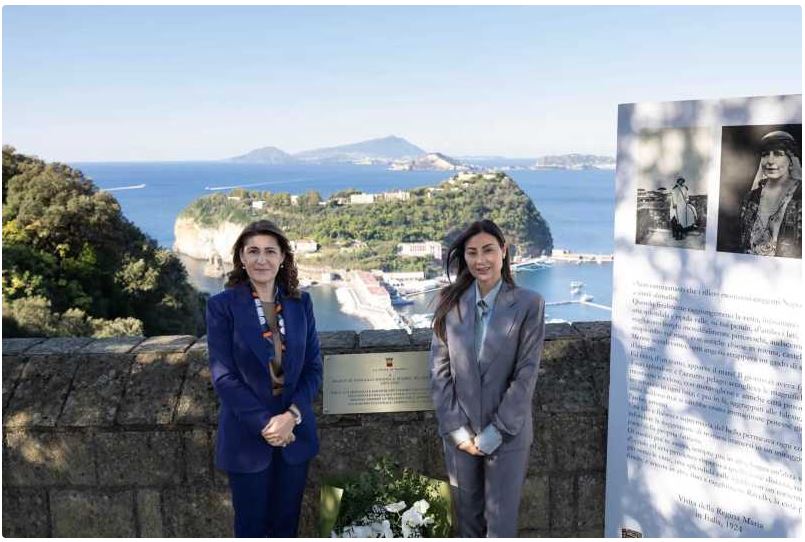
Romania’s ambassador to Italy, Gabriela Dancau, together with Romania’s honorary consul general in Naples, Gilda Pacifico, and Naples Deputy Mayor Laura Lieto, attended this week the unveiling of a commemorative plaque dedicated to Queen Marie of Romania in Naples’ Virgiliano Park.
Located in one of Naples’ most iconic public spaces on the Posillipo hill, overlooking the Gulf of Naples, the plaque symbolically highlights the deep connection between Queen Marie and southern Italy, whose landscapes, historical landmarks and cultural traditions held a special place in the sovereign’s writings.
Speaking at the ceremony, ambassador Dancau said the initiative inscribes Queen Marie’s name into the living memory of Naples and offers visitors an opportunity to discover a historical figure who understood that a nation’s strength is also measured by its ability to foster solidarity, defend its values and build bridges of understanding with other peoples.
“In a Europe once again facing tensions and major challenges, Queen Marie’s legacy reminds us of the importance of historical awareness, responsibility toward the future and confidence in the power of culture to bring people together. I hope this site will become a symbol of Romanian-Italian friendship and an invitation to future generations to preserve and enrich the shared values that unite us,” the ambassador said.
Queen Marie remains one of the most prominent figures in Romania’s modern history through her contribution to the country’s development, her dedication to the Romanian people during World War I and her efforts to promote Romania’s interests internationally. Her presence amid wounded soldiers, medical staff and civilians during the war established a model of public service built on solidarity, dignity and commitment to the nation.
Beyond her political and historical role, Queen Marie was also noted for her literary and artistic interests, her appreciation of European cultural heritage and her ability to identify lasting opportunities for dialogue between civilizations. Her writings on Italy, particularly Naples, Pompeii and the Amalfi Coast, reflect both her admiration for the region’s beauty and her deep interest in Italian history, art and cultural identity.
The commemorative project was carried out through cooperation between the Romanian Embassy in Italy, the Honorary Consulate General of Romania in Naples and the municipal authorities of Naples, reflecting the Italian institutions’ openness to promoting Romanian historical and cultural landmarks in the city’s public space.
The ceremony is part of the broader programme of the Romania – Italy Cultural Year 2026, highlighting the depth of bilateral relations built over centuries through intellectual, artistic and human exchanges, as well as the role of cultural diplomacy in strengthening dialogue between institutions, communities and generations.
For the Romanian community in Italy’s Campania region, the event represents a source of pride and a reaffirmation of belonging to a shared European historical and cultural tradition, while for the Italian public it offers an opportunity to discover one of the personalities who played a decisive role in shaping modern Romania.


