Presidential Election Was Won by Idea of Presidency Built on Consensus – Vice President-Elect Valchev
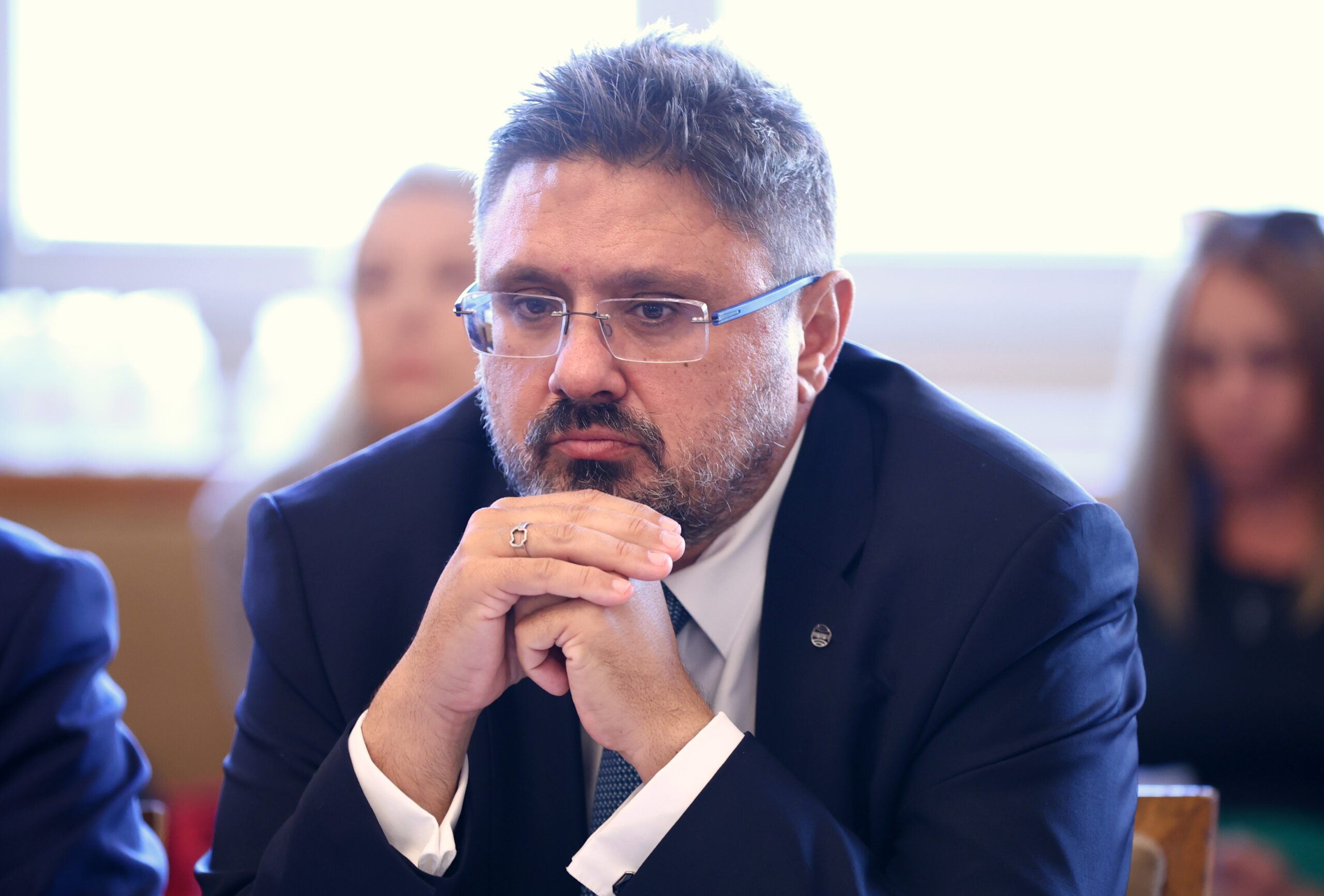
Interviewed on the Bulgarian National Television on Sunday, Vice President-elect and Bulgarian News Agency (BTA) Director General Kiril Valchev said that the first takeaway from the recent presidential election is that, for the first time, Bulgaria has elected a woman as president. The second is that the election was won by the idea of a presidency built on consensus rather than confrontation.
“Iliana Iotova is a person with extensive experience in public office, a strong commitment to Bulgaria and a wealth of knowledge. This is a powerful symbol for our nation, which granted women the right to vote years before Greece, Portugal and Switzerland, and introduced secular education for women long before many other nations,” Valchev said. In his words, this is significant and reflects the democratic mindset of the Bulgarian people.
“I believe that pro-Bulgarian forces won the election,” Valchev said, adding that “even those who describe the victory as one for pro-Russian forces are also pro-Bulgarian, rather than representing some other interests.”
Asked whether they would have succeeded without Rumen Radev, Valchev replied: “We would not have succeeded without everyone who supported us.” Voters from all political parties supported us, and that is what matters most, he added.
“I see no reason why Rumen Radev should not be supported for a budget that sends a strong signal by providing a somewhat larger increase in Bulgarian teachers’ salaries,” Valchev said. He recalled that he had long advocated equal treatment for journalists working in public-service media and teachers. “This group should also include employees of Bulgarian libraries, museums, art galleries, theatres and community centres, as they help preserve the country’s cultural and spiritual heritage. I would add another important group that plays a similar role in representing the Bulgarian spirit – Bulgarian diplomats,” Valchev said. Regarding the budget, he added that he would put forward for discussion the idea of providing systematic support to Bulgarian media outlets around the world that publish or broadcast in Bulgarian.
“One of the major challenges facing all of us in the coming weeks and months is to try to ease tensions between us. I am confident that Ms Iotova and I will be able to put behind us what has been said about us and instead listen to the positive contributions and good ideas coming from all sides,” Valchev said.
Asked to comment on pardons granted by Iliana Iotova in his capacity as a lawyer, Valchev said he would describe them neither as a mistake nor as a trap. “The principle we follow is: ‘Give me the facts, and I will give you a decision. I do not know the facts,'” he added. He said that the biggest problem surrounding pardons, and indeed in Bulgarian society as a whole, was trust in procedures and expert assessments. “Let us consider together with Parliament whether these procedures could be regulated by law rather than by presidential decree. Parliament should discuss a comprehensive bill covering all types of expert assessments in Bulgaria,” Valchev said.
The Bulgarian language law should require signs and inscriptions in Bulgarian using the Cyrillic alphabet, Valchev said, commenting on the bill, which had passed its first reading in Parliament. He added that he would recommend making English-language signage mandatory as well, so that Bulgaria could be more accessible and competitive internationally.
Asked whether he had a preference as to who should take over the BTA, Valchev said that this was a decision for Parliament to make. “What matters to me is that I am leaving BTA in a strong position. Whoever takes over must demonstrate continuity,” he added. He said it was important for his successor to preserve and develop the agency’s network of correspondents, as well as to continue his goal of adding one national news agency every month with which the BTA could exchange news free of charge. Maintaining ties with Bulgarian communities abroad and continuing projects with European institutions were also among his priorities. “My advice to my successor at the BTA is to continue expanding the use of artificial intelligence, but, most importantly, to invest in human intelligence. I do not see artificial intelligence as a threat that takes something away from us. I see it as an opportunity to give us something more,” Valchev said.
Valchev was also asked to address criticism over his business travel expenses. He said he had been a lawyer for 20 years, and he travelled around the world during that time. Asked whether the trips he had taken during his tenure at the BTA had placed a financial burden on the agency, Valchev replied: “I do not think so.” “My business trips were paid for by the BTA, as that was part of my job, but I always tried to make them as economical as possible,” he added.