
DefMin Dendias: Greece-Portugal KC-390 deal provides air-to-air refuelling capability for the first time
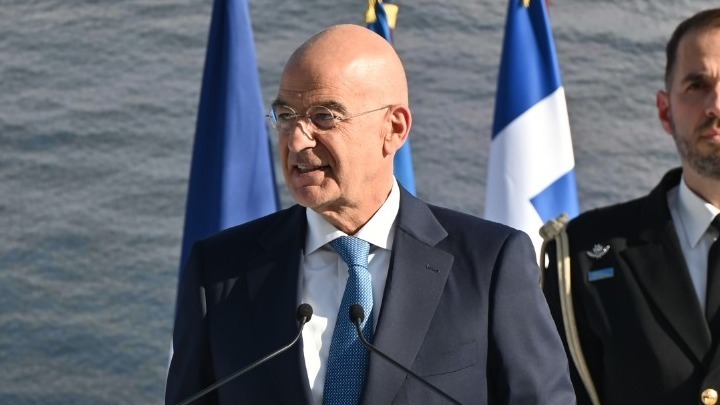
The agreement with Portugal for the acquisition of three Embraer military transport aircraft, plus an option for three more, opens a new chapter in defence cooperation between Athens and Lisbon, Defence Minister Nikos Dendias said on Monday. He was speaking after the signing of an intergovernmental agreement with Portugal at the Ministry of National Defence, in the presence of Portuguese Defence Minister Nuno Melo.
Dendias described the day as particularly significant for relations between Greece and Portugal, stressing that “this is the first time that the excellent relations between the two countries have acquired such specific defence content.”
The procurement of the aircraft marks two milestones for Greece, he said: “The acquisition of jet-powered transport aircraft and the introduction of air-to-air refuelling capability for fighter jets.”
Referring to the agreement for the procurement of “three plus three Embraer KC-390 aircraft”, he highlighted the importance of the programme for upgrading the operational capabilities of the Hellenic Air Force.
He placed particular emphasis on the aircraft’s ability to refuel fighter jets in flight, explaining that the capability will initially be available for Rafale and Mirage aircraft and, around a year later, for F-16s.
“There is no way I can sufficiently underline the enormous advantage that this air-to-air refuelling capability gives our fighter aircraft,” he said.
According to Dendias, air-to-air refuelling can significantly extend the time fighters remain airborne, fundamentally changing operational conditions. Without this capability, the duration of a mission is limited by available fuel, whereas in-flight refuelling can extend it considerably, with the pilot’s endurance becoming the main limiting factor.
The defence minister thanked the Portuguese side for transferring know-how and supporting the training of Greek pilots. He made special reference to the presence of a Portuguese KC-390 aircraft in Thessaloniki during the 28 October parade, which gave the Greek public an opportunity to see the aircraft in flight.
Dendias stressed that defence cooperation with Portugal extends beyond military transport aircraft. “Other areas of advanced technology are also on the table,” he said, highlighting maritime unmanned systems, an area in which Lisbon has developed significant capabilities.
He referred to a specialised centre at a naval base in Lisbon that he had visited, noting that the two countries plan to strengthen cooperation in this field. He also spoke of prospects for collaboration in the development of unmanned platforms and other technological systems.
He included space cooperation in this broader framework, saying Greece was seeking partners to develop capabilities related to satellites and Europe’s presence in space. He announced that Greece’s Space Command is expected to be inaugurated in the coming days, adding that cooperation with Portugal could extend to this field as well.
A significant part of the discussions, according to Dendias, concerned the Law of the Sea and the United Nations Convention on the Law of the Sea (UNCLOS). He said he had briefed the Portuguese side on Greece’s positions and on Turkiye’s interpretation of the legal framework governing the region, making particular reference to the Turkish-Libyan memorandum.
Portuguese DefMin Melo: Agreement with Greece on three Embraer KC-390 aircraft is of strategic importance
Portuguese Defence Minister Nuno Melo on Monday highlighted the strategic importance of the intergovernmental agreement between Greece and Portugal for the procurement of three Embraer KC-390 aircraft by Greece.
He stressed that the agreement offers an opportunity to deepen cooperation between the two countries in areas such as aircraft maintenance, training, the exchange of know-how and the development of new capabilities.
He placed particular emphasis on exploring the possibility of jointly developing a floating platform for transporting unmanned aerial vehicles, adding: “We discussed many other areas of mutual interest that would benefit both countries, such as unmanned vehicles and the potential for co-production of unmanned aerial vehicles and defence systems.”
“There are,” Melo said, “many things we can do together.”


