
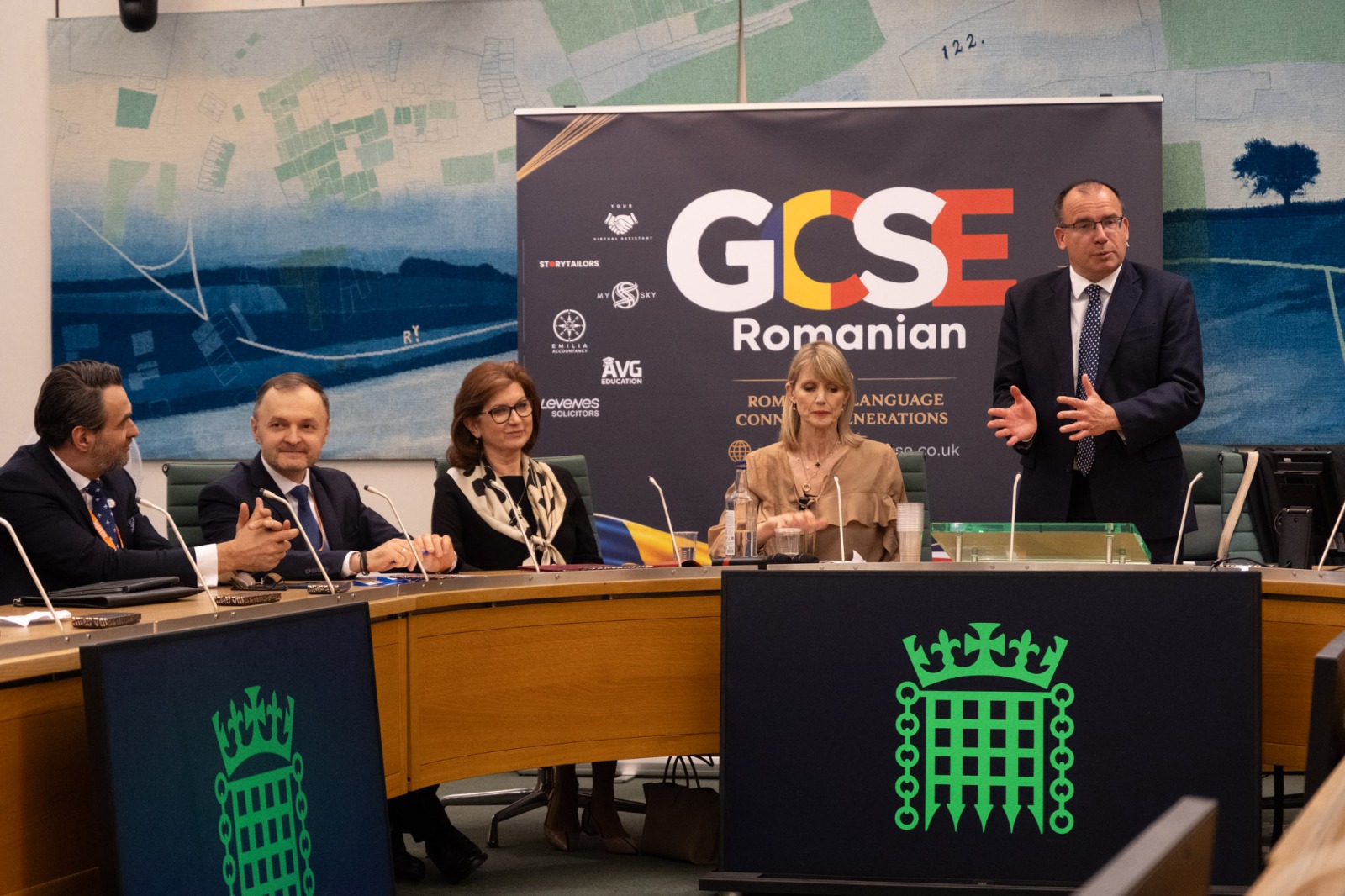
The event, hosted by MP Gareth Thomas, chair of the All-Party Parliamentary Group for Romania, brought together British parliamentarians, teachers, Romanian pupils and community representatives. The conference was coordinated by journalist Tessa Dunlop alongside the Romanian GCSE Campaign Group, with the Romanian Embassy as partner.
Speakers underlined the importance of introducing a Romanian GCSE from both an educational and identity perspective. Romanian pupils highlighted the need for formal assessment in their mother tongue, while Ruslan Bolbocean, Ambassador of the Republic of Moldova to the UK, also addressed the event.
In her remarks, Laura Popescu, Romania’s ambassador to the UK, said the issue goes beyond education policy, touching on “identity, belonging and recognition”. She noted that more than one million Romanians live in the UK and contribute significantly to the economy and society, particularly in sectors such as healthcare, education, business and the creative industries.
Although Romanian is widely spoken, pupils are currently unable to sit a GCSE exam in the language. According to the ambassador, its inclusion has been regularly discussed with the UK Department for Education and examination boards, but progress depends on sufficient demand and available resources.
The Romanian diplomat also outlined measures to support the preservation of linguistic identity in the diaspora, including Romanian Language, Culture and Civilisation (LCCR) classes delivered in UK schools, as well as Romanian language lectorates at the University of Oxford and the University of Cambridge, funded by the Romanian state. The long-standing tradition of Romanian studies at University College London was also highlighted.
The ambassador stressed that expanding such programmes and greater community involvement could help advance the introduction of a Romanian GCSE, encouraging parents to identify schools where Romanian language classes could be offered.
She added that including Romanian in the GCSE system would reflect the UK’s commitment to diversity and inclusion, while acknowledging the contribution of multilingual communities.


