
BiH still has 756 square kilometres of mine-suspected land, while deminers and donor funding decline
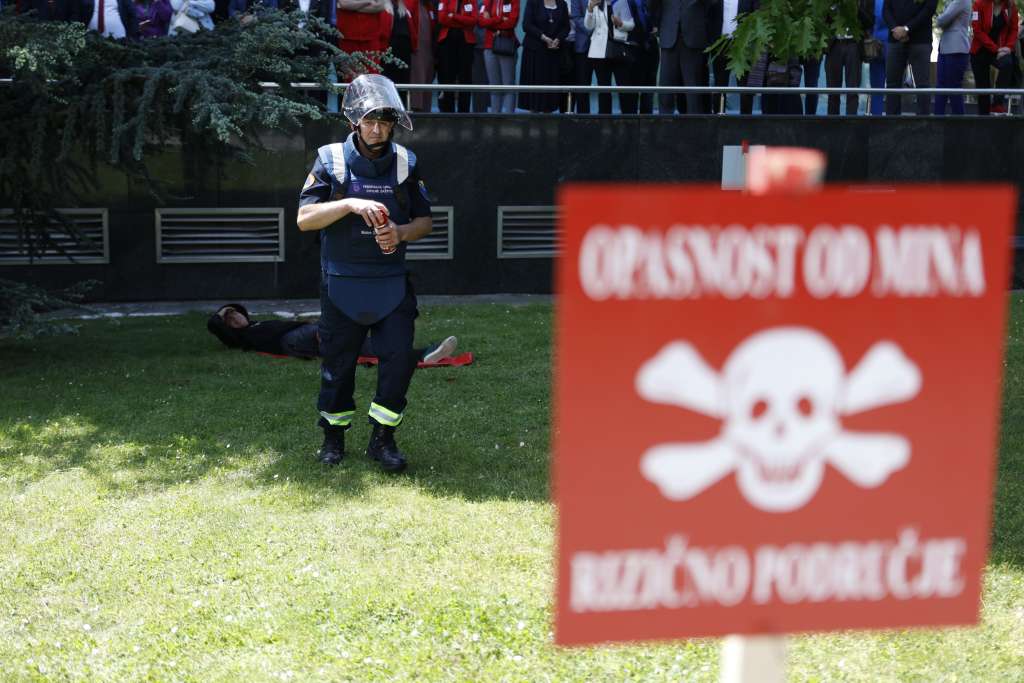
SARAJEVO, September 21 (FENA) – More than three decades after the end of the war, Bosnia and Herzegovina still has around 756 square kilometres of mine-suspected areas, while the number of people trained to carry out demining operations has nearly halved compared with the period before the COVID-19 pandemic.
A new Law on Mine Action, currently undergoing consultations, is intended to establish stable domestic funding for demining while also regulating the labour, social and pension rights of people performing one of the country’s most dangerous jobs.
According to the Bosnia and Herzegovina Mine Action Centre (BHMAC), around 774 square kilometres were considered mine-suspected at the beginning of the year. About 18 square kilometres have since been cleared, leaving an estimated 756 square kilometres, although the figure changes daily.
The new mine-action plan for 2027-2032 envisages returning around 55 square kilometres a year to safe use. BHMAC estimates that, with stable funding under the new law, annual capacity could increase to between 75 and 80 square kilometres.
Existing demining organisations can currently clear around 50 to 55 square kilometres a year, while a significant increase in capacity would require at least one to two years to recruit additional personnel and procure equipment.
Under the most favourable scenario, with the new law adopted, BHMAC estimates that Bosnia and Herzegovina could complete the demining process by the end of 2036. Without the law, and if donor funding continues to decline, completion could be delayed until around 2045.
The Ministry of Civil Affairs has cautioned, however, that new deadlines must be based on realistic financial, human and operational capacities, noting that annual demining plans in previous years were generally implemented at only 20 to 30 percent.
One of the key provisions of the draft law is an obligation for Bosnia and Herzegovina’s institutions, the entities and Brčko District to allocate at least 0.2 percent of their budgets to mine action.
Based on 2026 budgets, the Ministry estimates that this minimum would provide around 60 percent of the funding needed to meet the annual target of 75 square kilometres, which would require approximately 61 million KM. The remainder would still have to come from other domestic sources and international assistance.
The state has already begun increasing its contribution. The Council of Ministers has approved a 2025-2027 multi-year project worth 2 million KM to co-finance demining costs.
The move toward greater domestic funding has become increasingly important as international donor support declines. UNDP Bosnia and Herzegovina told FENA that international assistance has fallen significantly in recent years, while organisations that had long participated in mine-action activities, including Norwegian People’s Aid and the Mines Advisory Group, have withdrawn.
BHMAC has also cited the war in Ukraine as a factor contributing to the decline, as some international funding has been redirected there. Bosnia and Herzegovina is currently using EU IPA III funds and World Bank funding for demining along the right bank of the Sava River, but BHMAC warns that direct EU and World Bank grants are not expected to continue at the same level once these projects end.
The draft law also seeks to address the employment and pension rights of demining personnel. Current regulations do not consistently recognise all categories of workers who enter mine-suspected areas, even though team leaders, quality-control personnel, operational officers, dog handlers and machinery operators can face risks similar to those of deminers.
Under the draft, personnel engaged in mine-action operations would be entitled to enhanced service credit, a special salary allowance, more favourable pension conditions and rights in the event of injury or death during demining.
Deminer Amir Mehanović, who has worked in the field since 1997, said the demanding medical and psychological examinations and special safety requirements required for the job clearly demonstrate the level of risk involved.
He said some operational personnel had previously had to seek recognition of their rights through court proceedings, while some deminers had worked for years without officially registered employment.
The issue is becoming more urgent as the workforce declines and ages. Bosnia and Herzegovina currently has around 1,100 demining personnel, compared with more than 2,000 before the COVID-19 pandemic. BHMAC says the Armed Forces of Bosnia and Herzegovina’s demining battalion alone is currently short of around 60 personnel, equivalent to the capacity of eight to 10 teams, with similar shortages in the entity civil-protection services.
The FBiH Civil Protection Administration said interest in demining jobs and the number of applications had been declining, while a significant number of its employees have been performing the work for more than 20 years and are approaching retirement.
UNDP stressed that completing the demining process sustainably will require more than funding and clearance targets, saying stable and qualified personnel are essential to maintaining operational capacity.
The draft law has completed e-consultations, and the Ministry of Civil Affairs has obtained opinions from the relevant state and entity institutions. The text is still being harmonised, with further opinions pending before it can be submitted to the Council of Ministers.
The Ministry said that, if Bosnia and Herzegovina is to accelerate demining, secure stable funding and retain experienced personnel, the labour, social and pension status of demining workers must be regulated more systematically.
At the same time, it stressed that adopting the law alone would not be sufficient without stable funding, enough trained personnel, technical capacity, coordination and clear responsibility for results.


