
Kosovo Archives’ Mehmed Xhemajli says folk costumes reflect Albanian cultural heritage and tradition
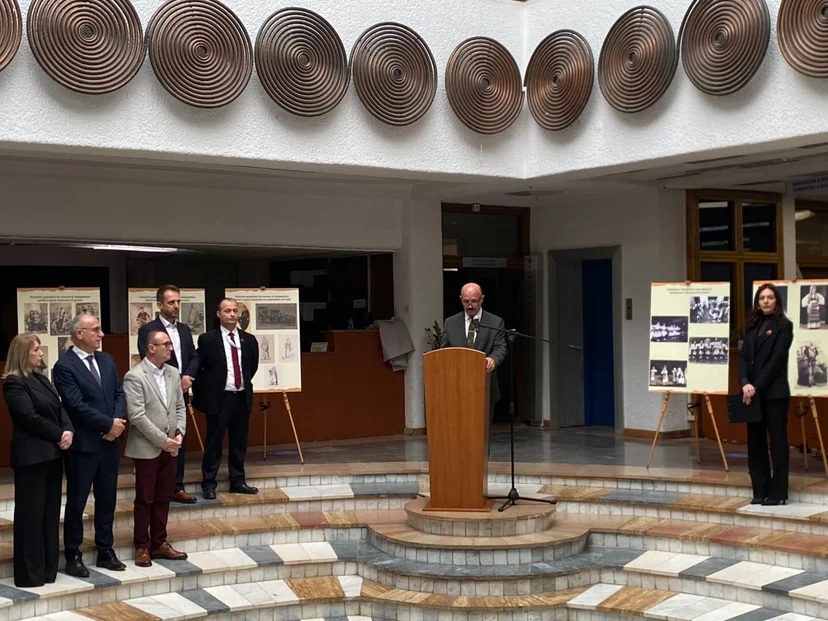
The exhibition “Return to Tradition – Albanian Folk Costumes” has opened at the National Library of Kosovo Pjetër Bogdani in Pristina.
The exhibition was organized by the Kosovo State Archives Agency, in cooperation with the General Directorate of Archives of Albania, within the framework of the Kosovo-Albania National Cultural Week, on the occasion of November 28, Flag Day.
At the opening of the exhibition, the Deputy Director of the State Archives Agency of Kosovo, Mehmed Xhemajli, said that Albanian folk costumes are among the richest expressions of cultural heritage, which reflect the lifestyle, customs, beliefs and creativity of past generations.The Deputy Director of the State Archives Agency of Kosovo, Mehmed Xhemajli, said that Albanian folk costumes are one of the richest expressions of cultural heritage, which reflect the lifestyle, customs, beliefs and creativity of past generations.
Xhemajli made these statements at the opening of the exhibition “Return to Tradition – Albanian Folk Costumes”, organized in collaboration with the General Directorate of Archives of Albania, within the framework of the activities of the Kosovo-Albania National Cultural Week, on the occasion of November 28, Flag Day.
He said that traditional clothing combines craftsmanship, the symbolism of motifs, the richness of colors, and the features that have characterized the different Albanian regions. “Folk costumes are among the most beautiful, richest and most representative expressions of our cultural heritage. They are not simply part of the tradition of clothing, but evidence of the way of life, customs, beliefs, aesthetic taste and creativity of past generations,” said Xhemajli.
He mentioned the variety of traditional Albanian clothing, highlighting the fustanella, tirqi, poture and brekushe for men, while for women the xhubleta, long shirt dresses, xhoka, aprons and wraps.
According to him, the materials used, the method of cutting and sewing, the ornaments and the combination of colors testify to a rich artisanal tradition, passed down through generations, where Albanian women have had a special role.
Xhemajli also highlighted the xhubleta, which he said represents a rare testament to traditional Albanian craftsmanship, while recalling that in 2022 UNESCO included it on the List of Intangible Cultural Heritage in Need of Urgent Protection.
“A special place in this heritage is occupied by the xhubleta, one of the most characteristic garments of women from the mountainous areas of Northern Albania. With its unique bell-shaped shape, its woolen material and its embroidered motifs, it represents a rare testament to traditional Albanian craftsmanship,” said Xhemajli.


