
In run-up to Ankara summit, Defence official says Romania is now a key actor for Eastern Flank balance, Black Sea security
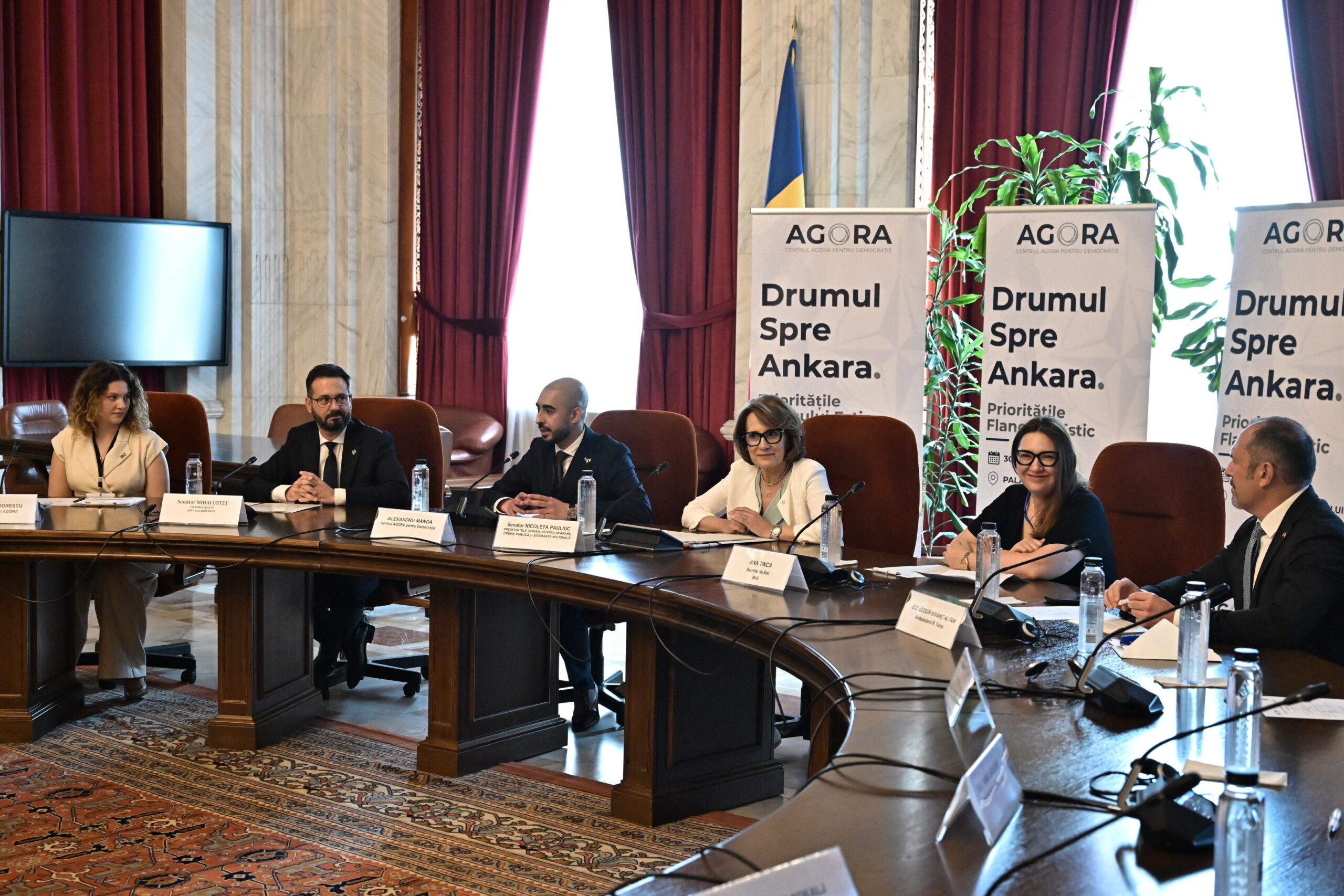
Romania must no longer be viewed as a peripheral NATO state but as an essential actor for the balance of the eastern flank, the security of the Black Sea, the support provided to Ukraine and the Republic of Moldova and for the credibility of Euro-Atlantic deterrence, chair of Romania’s Senate Defence Committee Nicoleta Pauliuc said on June 30 at a round table titled “The Road to Ankara. Eastern Flank Priorities”, organised by the AGORA Centre for Democracy with support from Policy Path and the Senate Defence Committee.
Pauliuc argued that Romania needs not only sound decisions but also “a mature strategic conversation” about its regional role and place in the European security architecture. She recalled that the Supreme Council for National Defence has already set Romania’s objectives for the Ankara summit, describing the meeting as “a test of strategic coherence for the entire Alliance”.
“Romania must go to Ankara with a clear message: the security of the eastern flank cannot be complete without a robust, coherent and permanent approach to the Black Sea,” Pauliuc said. She called for a strong defence and deterrence posture, adequate allied presence in air defence, air surveillance, mobility, maritime security and protection of critical infrastructure. “Here Romania no longer comes only with requests, but with deeds,” she underscored.
Pauliuc criticised the narrative that Romania is defined solely by vulnerabilities – proximity to war, drone incidents, hybrid risks, pressure on infrastructure. These are real, she said, but “a country is not defined by its exposure, but by the ability to transform that exposure into strategic relevance”.
She reiterated that Romania’s security is interconnected with that of Ukraine and the Republic of Moldova. “Romania’s security does not end at the Prut and does not begin in Constanta; it is built in all the space where instability can become a threat. Support for Ukraine and the Republic of Moldova does not mean only solidarity, but strategic lucidity. The better Ukraine resists, the safer the eastern flank. The more stable the Republic of Moldova, the more protected Romania is, the safer the Black Sea, the safer Europe is. That is the equation we are taking to Ankara,” Pauliuc said.
She also stressed that “in defence, good intentions do not defend borders, only capabilities can do that”.
Deterrence, she said, is not rhetoric but “capacity, presence, industry, infrastructure and political will”. Romania cannot ask for a stronger allied posture without building a stronger national posture: serious defence investment, predictable budgets, timely execution, infrastructure enabling real military mobility, interoperability and institutions capable of operating at the pace required by current security realities. “Peace is not defended with improvisation,” the Senate Defence Committee head pointed out.
One of the major lessons of the war in Ukraine, she added, concerns defence industry capacity. In a crisis, “it’s not just what you bought that matters, but what you can produce, repair, adapt and deliver on time”. Romania must become not only a procurement market, but a space for production, maintenance, research, innovation and allied industrial cooperation.
Senior Foreign Ministry official Ana Tinca said the Ankara summit carries a very important stake, as it takes place in an “exceptional” security environment marked by the ongoing war in Ukraine, new conflict zones affecting partners, and a recalibration of U.S. security and defence policy. Allies must manage this recalibration in a way that preserves a solid deterrence and defence posture “without the emergence of new vulnerabilities”, Tinca explained.
The Foreign Ministry official said the summit is an opportunity for NATO to project “an image of solidarity and power”, stressing that political messages must be backed by concrete commitments, including increased defence spending and ensuring the Alliance has the capabilities needed to counter threats, “first of all, the Russian threat”.
Turkish ambassador Ozgur Kivanc Altan* said Ankara expects the summit to send a strong, unambiguous message of transatlantic solidarity. Unity is needed “more than ever”, he said, with war continuing “immorally” in the neighbourhood and instability around the Alliance widening. The summit must deliver results and reaffirm a 360-degree security approach, strong support for Ukraine and commitments on increased defence spending, including the 5% benchmark.


