
EU Black Sea security hub, key to protecting critical maritime infrastructure (former ForMin)
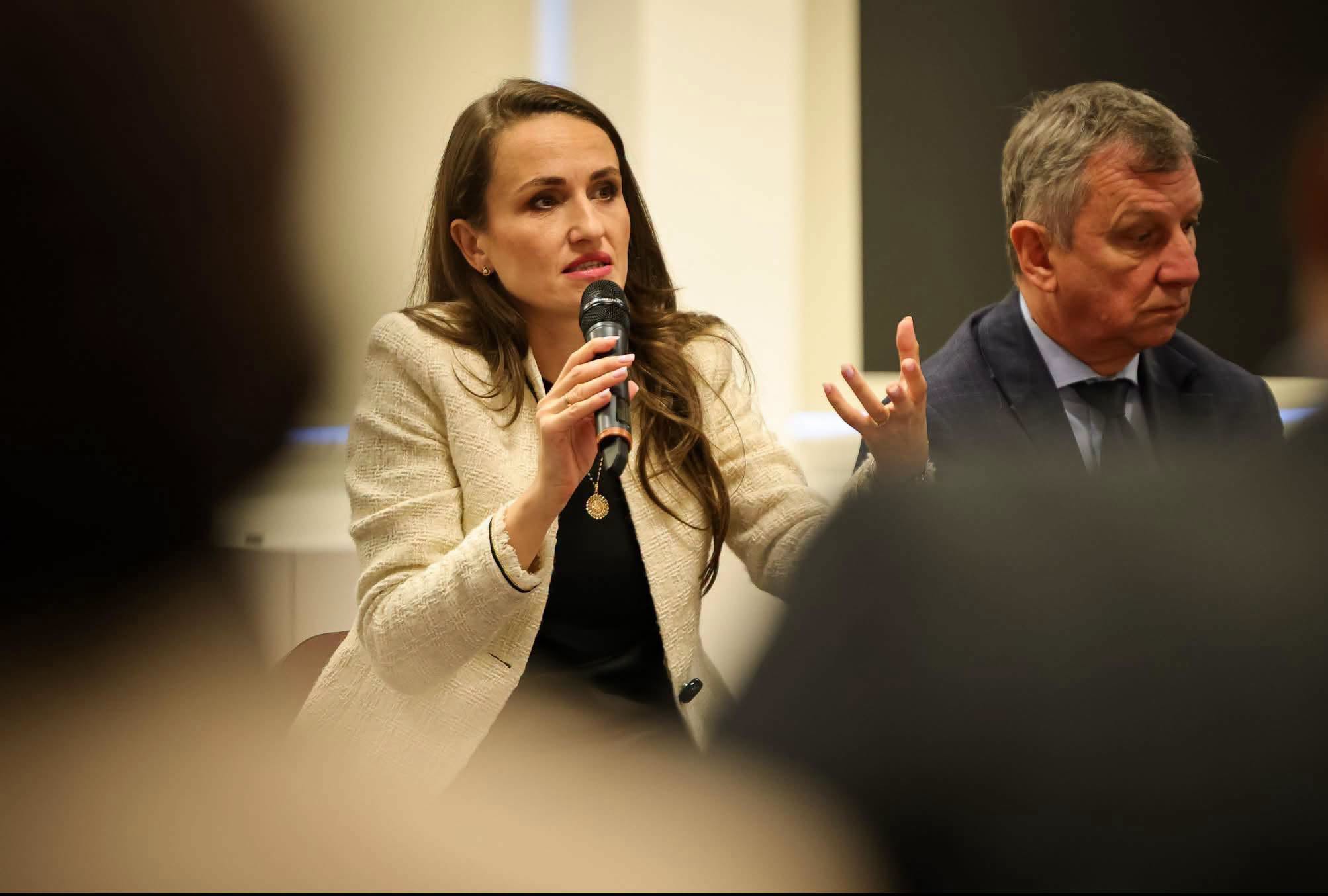
Former foreign minister and Save Romania Union (USR) MP Oana Toiu said the European Black Sea security hub will have two complementary headquarters, in Constanta, Romania, and Varna, Bulgaria.
“Today’s announcement by the European Commission, coinciding with Ursula von der Leyen’s visit to Bucharest, of 50 million euros in funding for the European Black Sea Maritime Security Hub is a necessary step towards demonstrating shared responsibility through joint investment,” Oana Toiu wrote on Facebook on Monday.
The hub will be responsible for monitoring, early warning and protecting critical maritime infrastructure (ports, submarine cables, pipelines, offshore installations and shipping routes), as well as strengthening resilience against hybrid and cyber threats.
“The Black Sea has recorded the highest number of seafarer deaths this year, making it effectively the most dangerous sea in the world, and this affects human lives, the security of our investments and directly impacts food prices in other parts of the world,” the USR lawmaker said.
In this context, Toiu stressed that a Black Sea ceasefire covering energy and food supplies should be part of the upcoming US-mediated talks between Ukraine and Russia in Abu Dhabi, with the participation of a European delegation.
“The Commission president’s visit is also intended to help prepare the positions of the European delegation that will take part in the talks between Ukraine and Russia, alongside the mediation announced by the United States. The reference to Turkey in today’s official statements is important because we already expanded cooperation between Romania, Bulgaria and Turkey in July, at the NATO Summit in Ankara, to protect critical infrastructure in the Black Sea. The trilateral mine countermeasures format is already operational, as is coordination with Ukraine on mine clearance,” Oana Toiu said.
According to Toiu, the hub will be interconnected with several mechanisms relevant to Black Sea security: CISE, the European Common Information Sharing Environment for maritime information, associated with the European Maritime Safety Agency (EMSA); MARSUR, the maritime surveillance network developed under the European Defence Agency (EDA); SCOMAR, Romania’s Black Sea surveillance and observation system; Frontex; SATCEN; ENISA; the European Cybersecurity Competence Centre in Bucharest; and relevant NATO structures.
“The next steps are to formalise the timetable for making the hub operational and appoint a coordinator for the multidisciplinary implementation team, establish the legal structure and the Governing Board (comprising officials from the institutions involved), formally appoint a national coordinator and a joint director, include national contributions in Romania’s and Bulgaria’s annual budgets for 2027, and continue strengthening dialogue with Turkey, the European Commission and member states with their own strategic approaches to the Black Sea (Germany and France),” Oana Toiu added.
The European Commission is allocating an additional 10 million euros to the Romanian authorities for search and rescue operations in the Black Sea, European Commission President Ursula von der Leyen said on Monday in Bucharest at a joint press conference with President Nicusor Dan.
Von der Leyen also announced that efforts to make the Black Sea maritime security hub operational would be sped up, as she warned that security challenges in the region had intensified recently, and called for the restoration and preservation of freedom of navigation in the Black Sea.


