
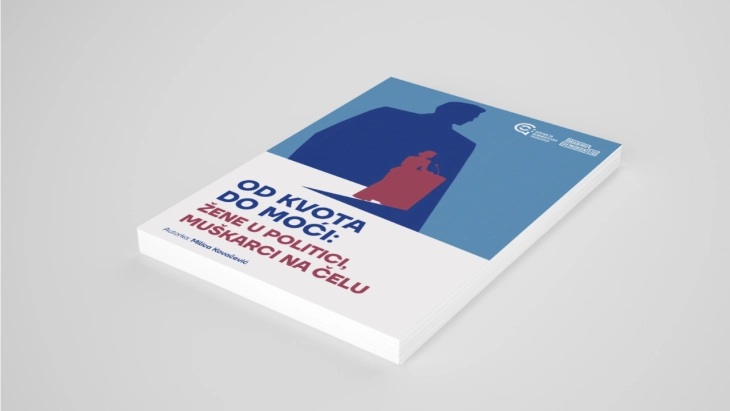
Podgorica, (MINA) – Women in Montenegro remain underrepresented in decision-making position, according to an analysis by the Center for Democratic Transition (CDT).
The analysis “From quotas to power: Women in politics, men in the lead” showed that Montenegrin political parties had learned to accommodate gender quotas, but had not shown the same willingness to enable women to have real influence over political decision-making.
“While legal guarantees of women’s representation are improving, key decisions about party positions, candidacies, funding and political advancement are still made in the narrow circles of party leadership, dominated by men”, CDT said in a press release.
It is recalled that the gender quota for electoral lists was increased from 30 to 40 percent, safeguards for the mandates won were improved, and special public funding was introduced to support the work of women’s party organizations.
“However, no parliamentary party has a female leader, and available research shows that women often perform a significant share of organizational and administrative work, while men more often occupy leading positions and have opportunities for political advancement”, the press release says.
The CDT said that the way public funds were used to promote women’s political empowerment was of particular concern.
CDT’s analysis also highlighted the practices of circumventing gender quotas.
It is stated that in the 2022 local elections, 23 electoral lists were announced despite failing to meet the legal requirements regarding the representation or distribution of candidates of the less represented gender.
Following the 2023 parliamentary elections, the parties used legal loopholes that allowed them to replace female candidates who declined to take up their mandates by male candidates ranked lower on the electoral lists.


