
Billion-euro investments on the horizon: What will Balkan Summit 2026 bring to Kosovo?
More than 110 new and modernization projects worth over €15 billion in public infrastructure alone are expected to be presented at Balkan Summit 2026, which will be held on October 19 and 20 in Prishtina.
The projects cover Kosovo, Albania and North Macedonia, while the aim of the summit is to present these three markets as a joint investment platform to attract international companies, financiers and development institutions.
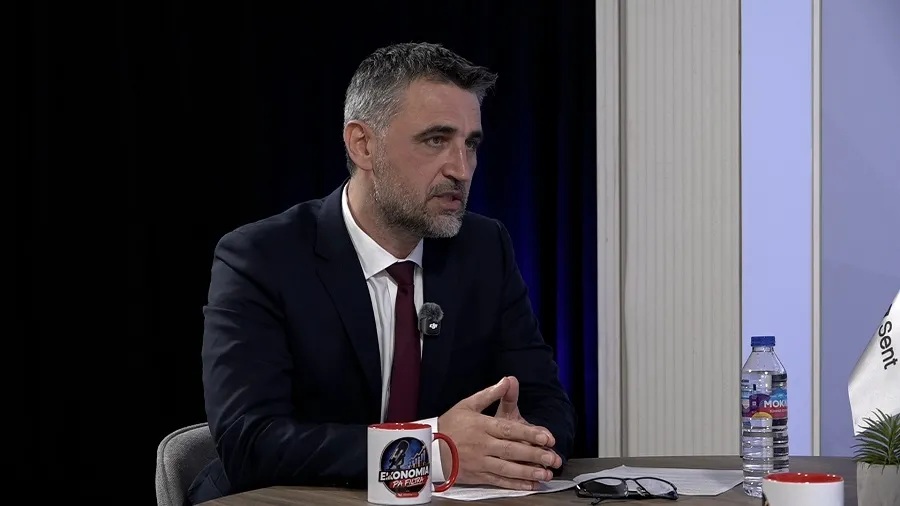
The summit’s organizer, Driton Dalipi, said the focus of the event is to turn projects into concrete initiatives and establish partnerships between public institutions, implementing companies and financial institutions.
“Because that is how serious investors look at this region. Individually, our markets are small, and a global contractor or a development bank will struggle to justify the cost of entry for a handful of projects in one country. Put Kosovo, Albania and North Macedonia together and you have a pipeline of real depth, shared corridors and a single logic. We’re not asking investors to discover three small markets. We’re offering them one regional market with three entry points. Montenegro, Bosnia, Croatia and Bulgaria may join future Balkan Summits,” Dalipi said.
In an interview with KosovaPress, Dalipi emphasized that the summit aims to serve as a platform for concrete agreements by identifying projects that are ready for implementation, those that require further preparation, and the partners who can move them forward.
“Balkan Summit is built as a deal-making platform, not a speaking platform. We bring the ministries and public institutions that own the projects, the companies that can build and operate them, and the financial institutions that can fund them into the same room. The question we want every session to answer is simple: What is ready? What still needs preparation? And who can take it to the next step?” Dalipi said.
He added that the aim is for each session to help determine the next steps for the projects and clarify which ones are ready for investment. He also outlined the sectors covered by the summit.
“The breadth is deliberate. Transport, energy, water and digital infrastructure do not exist in isolation. A data center needs power. Power needs grid connections. And industry needs roads, rail and skilled people. When you look at transport, environment and water, energy and AI data centers, tourism industry, digital services, agri-food together, you see how one investment strengthens the case for another. That is where the regional value sits,” Dalipi emphasized.
He believes that addressing these sectors in an interconnected way can create greater investment opportunities across the region.
“They are essential, but we are careful about expectations. Institutions such as the World Bank Group, DFC, KfW and AFD bring experience in project preparation, risk allocation and blended financing. Their presence helps everyone understand what makes a project bankable. It is not a promise to finance any specific project. Bankability still depends on sound economics, a clear legal framework and proper preparation. And that is exactly the conversation we want to have,” Dalipi added.
Speaking about his experience with development projects, he said that more than two decades of work with the European Union, the World Bank and USAID had influenced the concept behind the summit, particularly his understanding of the challenges projects face from the planning stage through implementation.
“It shapes everything. Two decades of delivering donor-funded programs teaches you how projects actually move from an idea to implementation and where they stall. We know the language of ministries, of contractors and of financiers. And we know that credibility is built on delivery, not on announcements. Our ISO certifications reflect the same discipline. Quality, information security, operational resilience and sustainability are not just slogans for us. They are how we work,” Dalipi emphasized.
Regarding the continuation of the initiative, Dalipi said the plan is to hold the summit in Tirana in 2027 and in Skopje in 2028, following its inaugural edition in Prishtina.
According to him, rotating the host cities aims to give participating countries the opportunity to lead the platform and continue discussions on projects and partnerships initiated at previous editions.
“Prishtina is the first edition, not the only one. Our plan is for Tirana to host in 2027 and Skopje in 2028, with Montenegro joining the initiative in a future edition, subject to agreement with our partners. Rotation gives each country ownership of the platform and gives investors continuity. The relationships that start in Prishtina should become project discussions in Tirana and lead to signed partnerships afterwards. Our message to regional governments is clear: demonstrate goodwill and build a lasting emotional deposit by actively engaging now, knowing that your turn to host and lead will undoubtedly come,” he said.
Dalipi said the success of Balkan Summit would not be measured by the number of participants or panels, but by the results achieved after the event.
“Not by the number of participants or the number of panels. The real measure is what happens three, six or twelve months later. Which projects move into serious assessment, which partnerships are formed, and which investments reach implementation? If the summit helps even a few strong projects cross that line, it will have done its job,” Dalipi concluded.


